The Evolution of PACS: From Digital Archives to Intelligent Clinical Platforms

Written by
XPAXS Technology Team

Integrating AI into Clinical Practice
XPAXS Technology Team
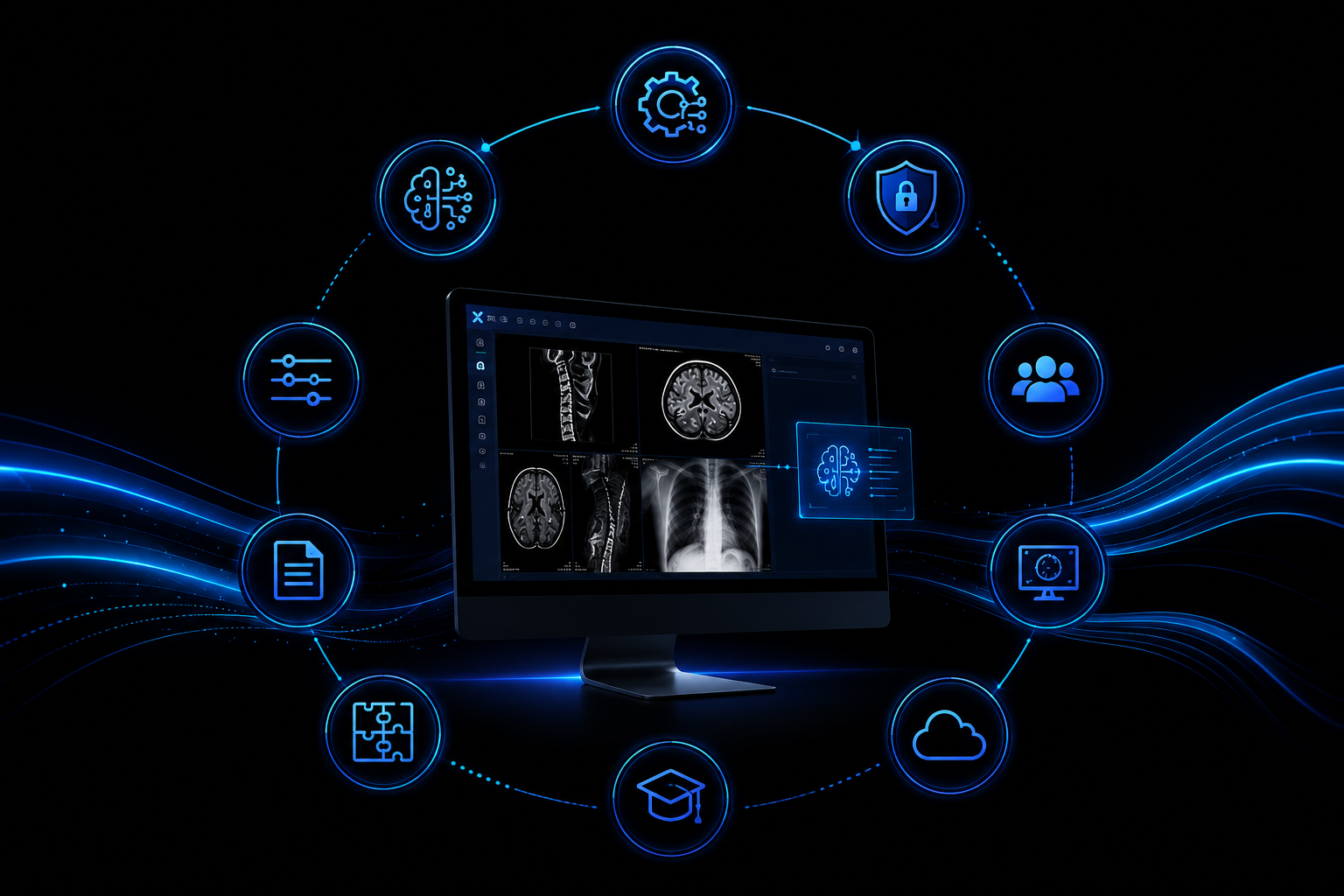
Picture Archiving and Communication Systems (PACS) have transformed medical imaging over the last three decades. What began as a digital replacement for film libraries has evolved into an intelligent clinical platform that connects imaging devices, radiologists, physicians, hospitals, and Artificial Intelligence into a unified ecosystem.
Today's PACS is no longer simply responsible for storing medical images. It has become the digital backbone of enterprise imaging—supporting clinical collaboration, workflow automation, cloud deployment, advanced visualization, structured reporting, and AI-assisted diagnosis.
Early PACS implementations focused on one objective—eliminating physical film. Images acquired from CT, MRI, Ultrasound, X-ray, and other modalities could now be stored digitally, retrieved quickly, and viewed from multiple workstations.
This transition dramatically reduced storage requirements, improved accessibility, and accelerated image distribution throughout healthcare organizations.



"Modern PACS is no longer a destination for medical images. It is an intelligent platform where imaging data becomes actionable clinical information."
As healthcare organizations became increasingly digital, PACS evolved beyond image storage. Integration with Radiology Information Systems (RIS), Hospital Information Systems (HIS), Electronic Medical Records (EMR), and scheduling platforms enabled a seamless imaging workflow.
 Automated patient demographics
Integrated modality worklists
Electronic scheduling
Digital report distribution
Enterprise-wide image accessibility
Multi-site collaboration
Automated patient demographics
Integrated modality worklists
Electronic scheduling
Digital report distribution
Enterprise-wide image accessibility
Multi-site collaboration
Healthcare organizations no longer manage imaging solely within radiology departments. Images originate from cardiology, pathology, ophthalmology, oncology, surgery, dermatology, dentistry, and numerous clinical specialties.
Enterprise Imaging extends PACS beyond radiology, creating a centralized imaging ecosystem that supports every department across the hospital.
The latest generation of PACS incorporates Artificial Intelligence directly into clinical workflows. AI algorithms assist radiologists by prioritizing examinations, identifying abnormalities, generating preliminary findings, and supporting structured reporting.
AI-assisted image analysis
Intelligent worklist prioritization
Large Language Model powered reporting
Speech-to-text integration
Automated structured reports
Workflow automation
Today's healthcare organizations increasingly demand scalable cloud infrastructure capable of supporting multiple hospitals, remote reporting, disaster recovery, and secure image sharing without compromising performance.
Cloud-native PACS enables healthcare providers to expand rapidly while reducing infrastructure complexity and operational costs.
Enterprise Vendor Neutral Archive (VNA)
Advanced Web & Desktop DICOM Viewers
AI-assisted Clinical Decision Support
Integrated RIS Workflow
Speech Recognition
Structured Reporting
Cloud & Hybrid Deployment
Enterprise-grade Security & Audit Trails
Standards-based DICOM, HL7 & FHIR Integration
The next decade of medical imaging will be driven by Artificial Intelligence, cloud computing, enterprise interoperability, and predictive analytics. Future PACS platforms will not merely display images— they will actively assist clinicians in diagnosis, automate workflows, and deliver actionable clinical intelligence across the healthcare enterprise.
PACS has evolved from a digital archive into one of the most important technology platforms within modern healthcare. By combining intelligent workflows, enterprise integration, advanced visualization, structured reporting, and AI-powered clinical assistance, today's PACS delivers value far beyond image storage.
Healthcare organizations investing in next-generation enterprise imaging platforms are preparing for a future where medical imaging is faster, smarter, more connected, and fundamentally driven by intelligent technology.