Why Imaging Centers Are Investing in AI-Powered PACS

Written by
XPAXS Research Team

Integrating AI into Clinical Practice
XPAXS Research Team
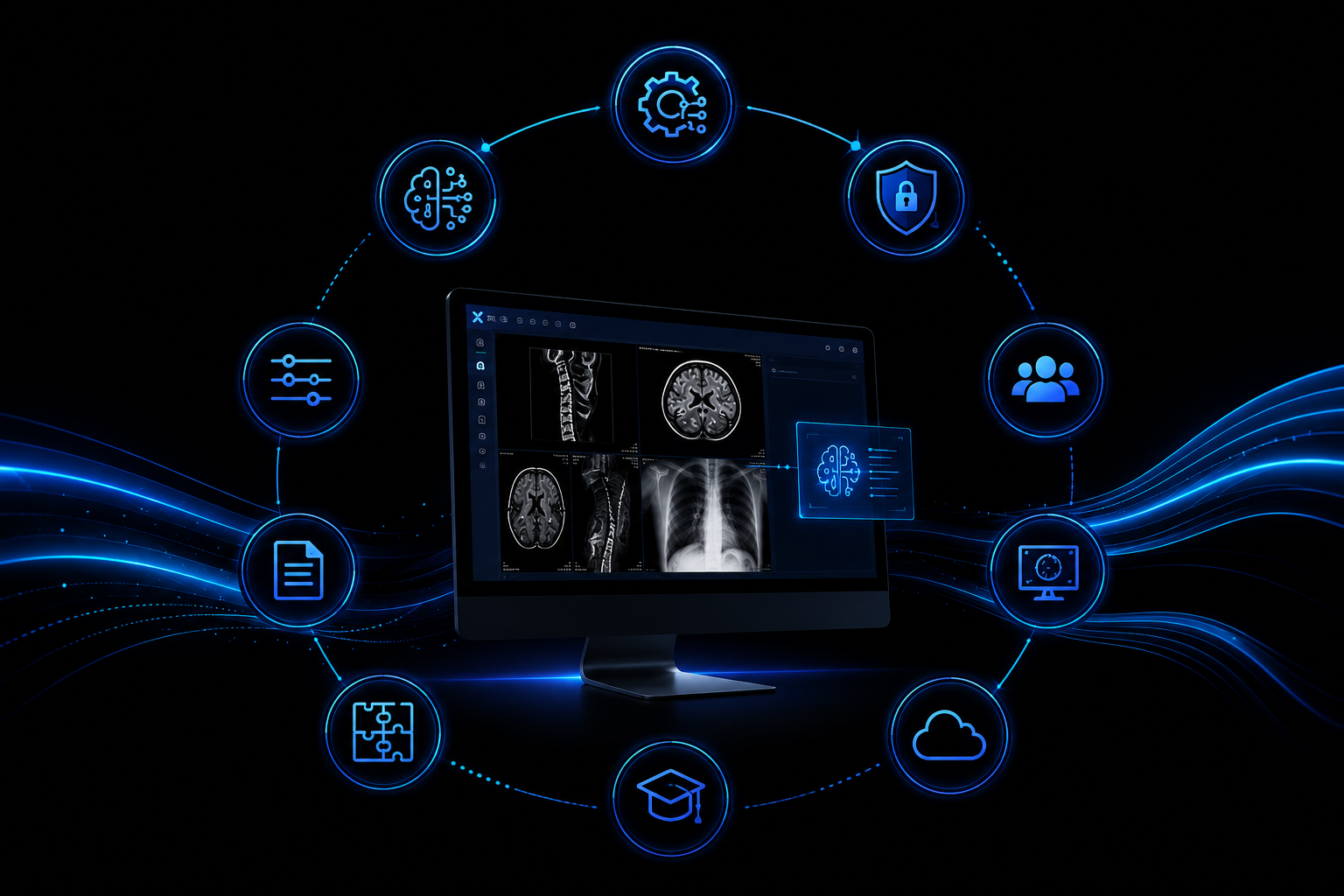
The medical imaging industry is experiencing one of its biggest technological transformations since the introduction of digital PACS. Artificial Intelligence is no longer viewed as an experimental technology—it has become a strategic investment that is reshaping the economics of diagnostic imaging.
Across hospitals, diagnostic centers, and multi-site healthcare networks, executives are investing in AI-powered PACS not simply to modernize their infrastructure, but to improve productivity, increase reporting capacity, enhance patient care, and create measurable financial returns.
Demand for diagnostic imaging continues to grow each year. More patients, more imaging modalities, and greater clinical complexity have placed tremendous pressure on radiology departments worldwide.


 Increasing patient volumes
Pressure to reduce turnaround time
Growing shortage of radiologists
Rising operational costs
Demand for better patient experience
Need for enterprise-wide imaging collaboration
Increasing patient volumes
Pressure to reduce turnaround time
Growing shortage of radiologists
Rising operational costs
Demand for better patient experience
Need for enterprise-wide imaging collaboration

"Today's PACS is no longer just a medical image archive. It has evolved into an intelligent clinical platform that directly impacts operational efficiency, patient satisfaction, and business growth."
The first generation of PACS focused primarily on storing and retrieving medical images. Modern AI-powered PACS platforms go much further by optimizing the entire imaging workflow—from image acquisition and intelligent worklists to AI-assisted reporting and structured clinical documentation.
Every minute saved during image interpretation translates into higher productivity, shorter waiting times, and improved utilization of expensive imaging equipment.
One of the biggest business advantages of AI-assisted workflows is the reduction in reporting time. When repetitive documentation is automated, radiologists can focus their expertise on interpretation rather than administrative tasks.
AI-assisted image interpretation
Intelligent structured reporting
Speech recognition integration
Automated workflow management
Smart worklists and case prioritization
Faster report approval and distribution
Investing in AI-powered PACS is not simply a technology upgrade—it is an operational strategy that delivers measurable returns.
Higher radiologist productivity
Increased daily imaging throughput
Reduced reporting delays
Better utilization of CT, MRI and Ultrasound equipment
Lower operational costs
Improved patient satisfaction
Stronger financial performance
Scalable multi-site operations
Healthcare organizations increasingly compete on speed, quality, accessibility, and patient experience. Imaging centers capable of delivering reports faster while maintaining consistent diagnostic quality gain a significant competitive advantage in today's healthcare market.
AI-powered PACS enables organizations to grow without proportionally increasing staffing or infrastructure, making expansion both sustainable and economically viable.
The next generation of imaging platforms combines enterprise PACS, vendor-neutral archives, advanced DICOM viewers, AI-assisted reporting, speech recognition, cloud deployment, workflow automation, and seamless integration with RIS, HIS, and EMR systems.
Organizations adopting these technologies today are preparing themselves for tomorrow's healthcare ecosystem—one that demands greater efficiency, smarter clinical workflows, and data-driven decision making.
AI-powered PACS is rapidly becoming a strategic investment rather than an optional technology upgrade. It helps imaging centers improve productivity, accelerate report turnaround, maximize equipment utilization, reduce operational costs, and enhance patient care—all while creating a stronger foundation for long-term growth.
The future belongs to imaging organizations that view technology not simply as infrastructure, but as a catalyst for clinical excellence, operational efficiency, and sustainable business success.