The Future Radiologist: Working Alongside AI, Not Against It

Written by
XPAXS Editorial Team

Integrating AI into Clinical Practice
XPAXS Editorial Team
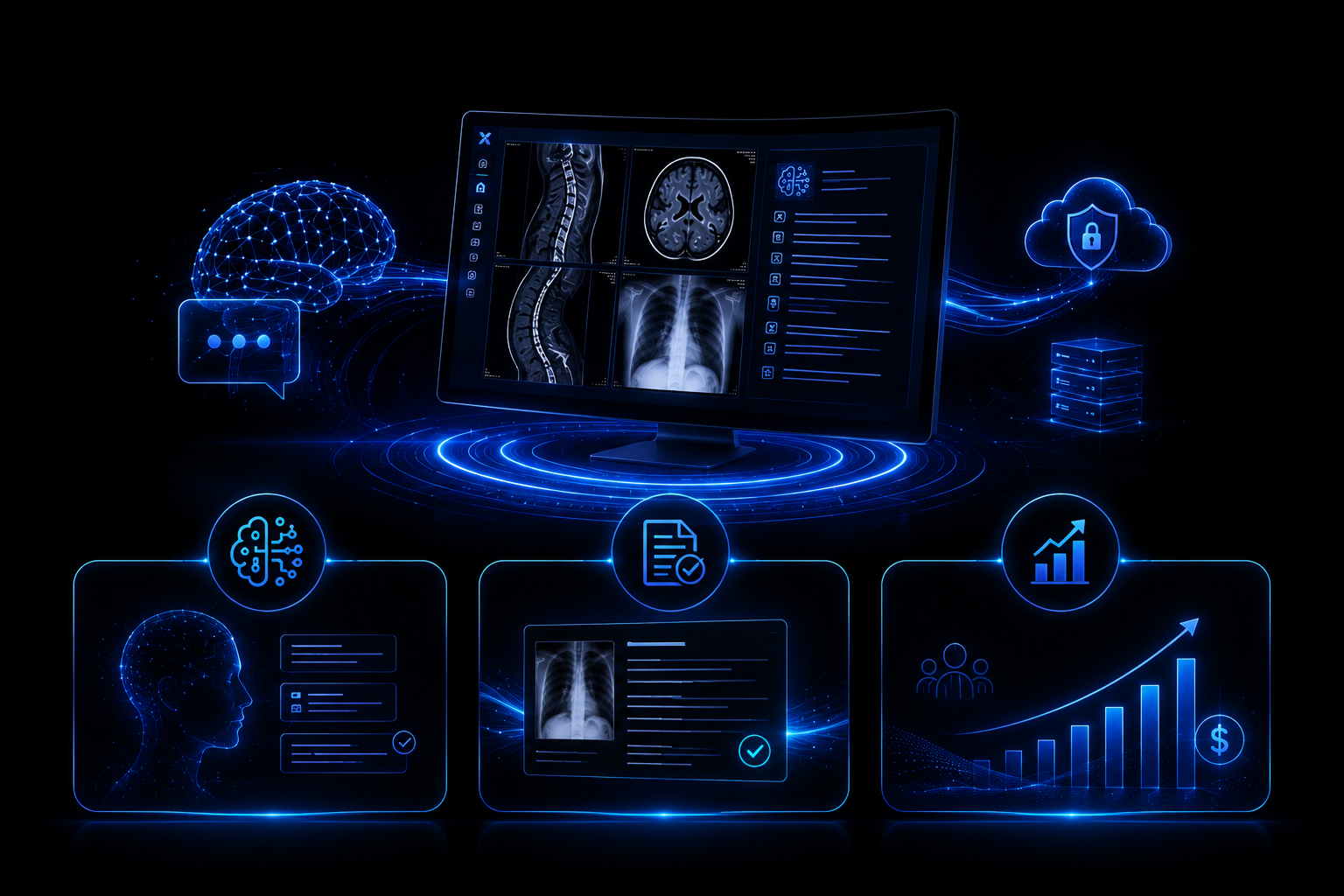
Artificial Intelligence has become one of the most transformative technologies in healthcare, particularly in radiology. As imaging volumes continue to increase and hospitals strive to deliver faster diagnoses, AI is often viewed as either a revolutionary breakthrough or a threat to the profession.
The reality is far more encouraging. AI is not here to replace radiologists—it is here to empower them. Modern AI systems act as intelligent assistants, helping clinicians reduce repetitive work, improve reporting consistency, and spend more time focusing on complex diagnostic decisions that require human expertise.
Healthcare providers are experiencing unprecedented growth in imaging studies across CT, MRI, Ultrasound, X-ray, Mammography, PET-CT, and other modalities. At the same time, radiologists face increasing workloads, tighter turnaround expectations, and a growing shortage of skilled specialists.


 Growing imaging volumes across all modalities
Faster report turnaround expectations
Increasing imaging data complexity
Global shortage of experienced radiologists
Administrative workload reducing clinical productivity
Rising demand for standardized, high-quality reporting
Growing imaging volumes across all modalities
Faster report turnaround expectations
Increasing imaging data complexity
Global shortage of experienced radiologists
Administrative workload reducing clinical productivity
Rising demand for standardized, high-quality reporting

"Artificial Intelligence does not replace clinical expertise—it amplifies it. The radiologist remains the decision maker, while AI removes repetitive work, accelerates analysis, and enhances reporting consistency."
AI excels at recognizing imaging patterns, highlighting suspicious regions, organizing findings, and preparing structured reports. However, medical diagnosis extends far beyond image interpretation.
Every diagnosis requires patient history, laboratory findings, previous examinations, physician observations, and years of clinical experience. These are uniquely human capabilities that cannot be replaced by algorithms.
Instead of spending valuable time formatting reports or documenting routine findings, radiologists can use AI-assisted workflows that automatically generate structured observations, organize clinical information, and streamline reporting.
Automated image analysis
AI-assisted clinical findings
Guided structured reporting
Integrated speech recognition
Smart worklists and workflow automation
Faster report verification and approval
AI-powered imaging platforms create measurable value not only for radiologists, but also for hospitals and diagnostic centers. Faster reporting improves patient satisfaction, increases imaging capacity, and enables organizations to serve more patients without proportionally increasing staffing costs.
Higher radiologist productivity
Faster turnaround time
Greater report consistency
Improved operational efficiency
Increased imaging center capacity
Better patient outcomes
The future of radiology lies in collaboration between intelligent technology and experienced clinicians. AI performs repetitive, data-intensive tasks with remarkable speed, while radiologists contribute the critical thinking, clinical reasoning, communication, and accountability that define quality patient care.
Next-generation platforms that combine enterprise PACS, AI-assisted image analysis, structured reporting, speech recognition, advanced DICOM viewing, and intelligent workflow automation will become the foundation of modern imaging departments.
Artificial Intelligence represents one of the most significant advancements in medical imaging. Its greatest contribution is not replacing radiologists—it is enabling them to work faster, report more consistently, reduce burnout, and focus on delivering exceptional patient care.
The radiologist of tomorrow will not compete with AI. Instead, they will leverage AI as a trusted clinical partner, combining human expertise with intelligent technology to achieve better outcomes for patients, healthcare organizations, and the future of radiology.